


 CLICK TO CALL
Dental Health Blog | Dr. Dan Foresto - Family & Cosmetic Dentistry
Can You Get a Dental Implant Years After Losing a Tooth?
October 18, 2026 / Dental Implants
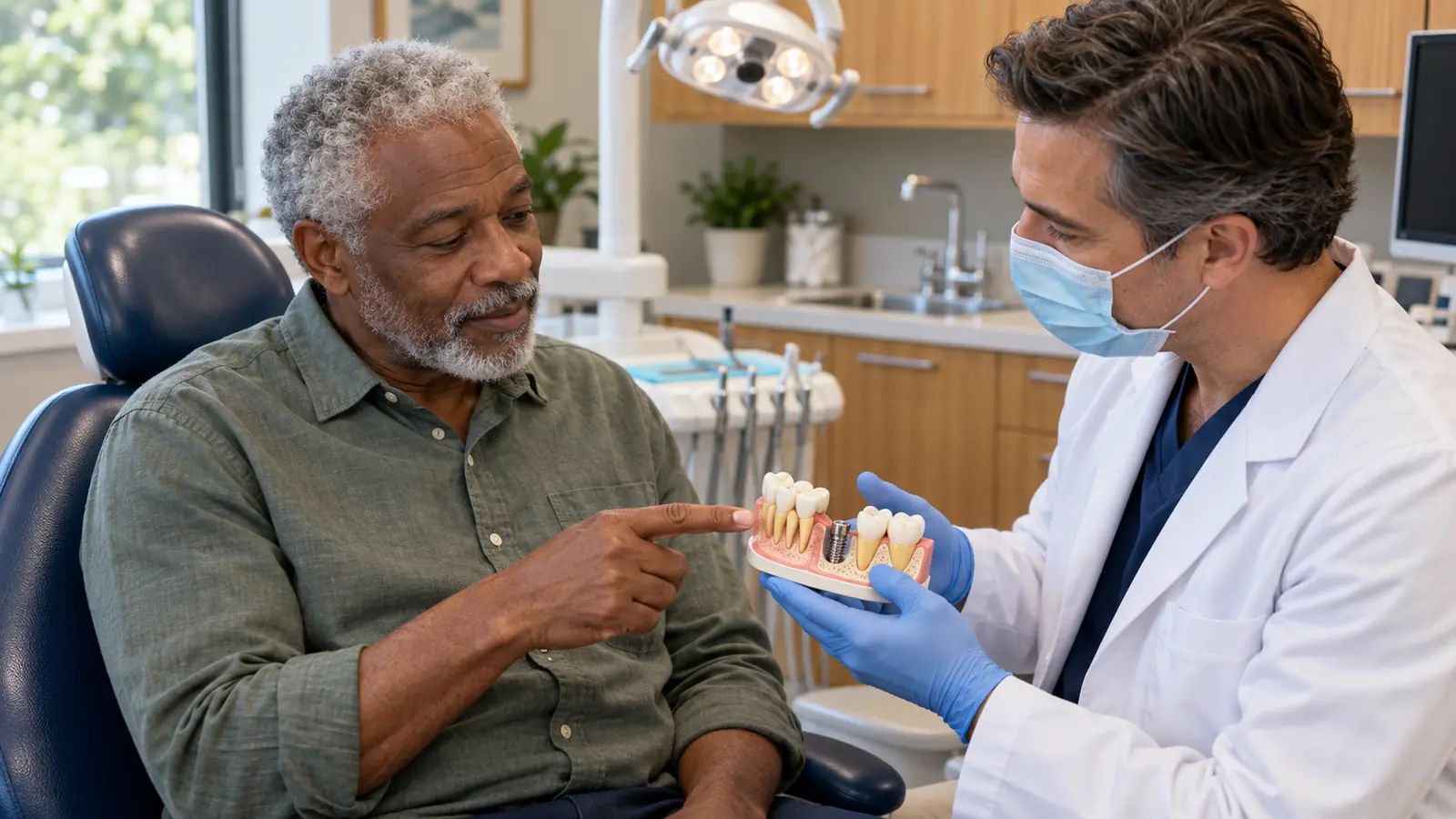
Losing a tooth years ago does not automatically close the door to a dental implant. The decision depends on the area today: its bone support, gum health, available space and bite, along with your medical history. Some people can consider an implant; others need preparatory treatment or a different replacement.
You might have managed with the gap for a long time and only recently started thinking about it again. Perhaps a removable tooth no longer feels convenient, or you want to understand your choices before another dental decision. An assessment is useful even when you are not ready to choose a treatment.
At Foresto Dentistry in Windsor, the discussion can start with a straightforward question: what would replacing this particular tooth involve now?
Does Waiting Years Rule Out a Dental Implant?
The date of extraction is part of the history, not an eligibility test. Two people who lost a tooth in the same year can have different treatment needs. A current examination provides more useful information than trying to compare yourself with someone else's timeline.
An implant is placed in the jaw to support an artificial tooth or another replacement. The Canadian Dental Association explains implant suitability in terms of factors such as general health, healthy gums and enough supporting bone. Where bone is insufficient, grafting may sometimes be considered after assessment.
That does not mean every old gap needs grafting, or that a graft makes every person a candidate. It means the question needs a closer look. Avoid ruling yourself out because of something you read about another patient's experience.
If an implant was suggested when the tooth was removed, bring that history. If you were previously told it was unsuitable, explain the reason you were given. Ask whether the earlier conclusion still applies and what information would be needed to review it. A new consultation should not come with an assumption that the answer will necessarily change.
How the Gap and Surrounding Teeth May Have Changed
The visible opening is only one part of the area being assessed. The dentist also needs to understand the support beneath the gum and how a replacement would fit between neighbouring teeth and meet the opposing teeth.
Over time, adjacent teeth may shift and the supporting bone may change after tooth loss. How much this matters varies. An apparently small gap is not enough to judge whether an implant and replacement tooth can be placed appropriately.
Think about what has changed in daily life. Do you avoid chewing on that side? Has food started catching somewhere new? Does an existing appliance feel less comfortable? Share those observations, while leaving the cause open for the dentist to investigate.
If an old denture or bridge is part of the story, include it. Bring a removable appliance and explain when you last wore it. Mention earlier adjustments or repairs, even if you do not know their technical names. What worked and what did not can help clarify the kind of replacement you hope to have.
You do not need to arrive with a perfect account of every year since the tooth was lost. Give the history you remember and ask whether records from a previous office would be useful.
What an Implant Assessment Reviews
An assessment should connect the condition of your mouth with the proposed replacement. The dentist examines the site, considers the surrounding teeth and gums and may recommend imaging. Ask what the findings mean for the specific tooth you want to replace.
Foresto Dentistry's information about dental implants in Windsor introduces its implant services. During a consultation, ask how those services apply to a long-standing gap rather than assuming a general treatment description is your personal plan.
Medical history is part of the discussion. Bring your medication list and tell the team about relevant health changes, tobacco use and past healing problems. If you have questions about a medicine, ask the prescribing professional and dental team; do not stop it on your own before the visit.
Gum condition also deserves attention. You can ask whether a gum health assessment identifies anything that should be treated or monitored before choosing a replacement. The goal is to understand the whole area, not simply find enough room for an artificial tooth.
Be candid about practical concerns. If the number of visits, surgery, cleaning or cost worries you, raise it before agreeing to treatment. A useful consultation explains the choices in a way that lets you decide what you can realistically undertake.
When Additional Treatment May Be Considered
An implant plan may involve more than placing the implant and attaching a tooth. Ask whether there is anything to address first and why. Preparatory treatment should have a clearly explained purpose based on your findings.
If grafting is discussed, ask where support is needed, what the procedure is intended to accomplish and how it affects the sequence. Also ask whether other replacement choices would avoid that step and what their trade-offs would be. You should be able to compare complete plans rather than feeling that one preliminary procedure commits you to everything that follows.
There may be a need for further evaluation of space, bite or nearby dental problems. In a complex case, ask whether a referral would help establish the options. Clarify which clinician would provide each part of care and how information would be shared.
Request a realistic outline of appointments and healing periods. Ask what would be in the gap between stages and whether your current removable appliance could still be used. Do not assume that a same-day replacement advertised generally will be appropriate for an older gap or that a temporary tooth is the final restoration.
Comparing Implants With Other Replacement Choices
The right discussion includes alternatives. Depending on your mouth, those may include a bridge or a removable replacement. If several teeth are missing, the plan may need to address the group together rather than treating every space as a separate single-tooth case.
Foresto Dentistry's article on single-tooth dental implant options offers background on replacing one tooth. For a tooth lost years earlier, ask which parts of that general approach remain straightforward and which need additional planning in your case.
Use everyday criteria when comparing suitable choices. How would each feel during meals? How would you clean it? Would it be removable? What treatment would the neighbouring teeth require? What kinds of maintenance or repairs might be needed over time?
Ask for an estimate that identifies the scope of treatment, including any preparation, temporary replacement and final restoration. If two estimates look very different, first check whether they include the same stages. Avoid assuming the lowest initial figure represents the total cost of the plan.
If you decide to wait, ask how the area should be monitored and what changes should prompt a review. Understanding the implications of waiting is part of making a choice; it does not require agreeing to immediate treatment.
Questions to Ask About a Long-Standing Gap
Before the appointment, write down when the tooth was lost, any previous recommendations and what you want to improve. Then bring a few questions that will help you understand the findings.
- What does the examination show about this old tooth space?
- Is an implant a reasonable option now?
- Would anything need treatment before implant placement?
- Are there suitable alternatives that involve fewer stages?
- How would the replacement work with my existing teeth or appliance?
- What would I use while the area heals?
- Who would provide the surgery, replacement tooth and maintenance?
- What is included in the estimate and follow-up schedule?
Ask the dentist to distinguish what is known from what still needs investigation. If further imaging or another opinion is recommended, clarify which decision it will help answer.
Take time to review the explanation. It is reasonable to ask for a written sequence or to repeat a question in different words. A long-standing gap often involves years of uncertainty; you should leave knowing the next step, even if the final treatment decision has not yet been made.
Frequently Asked Questions
There is no single deadline that tells you whether an implant is possible. The current condition of the site matters. Ask for an assessment and an explanation of whether further delay could affect the available choices in your case.
No. The recommendation depends on the supporting bone and the proposed implant plan. Time since extraction is not enough to establish the need for grafting. Ask what the dentist has found and what the suggested procedure would address.
Yes, nearby teeth may shift after a tooth is lost. Whether movement has occurred and whether it affects treatment require assessment. Ask the dentist to explain the available space and how the replacement would fit into your bite.
Several missing teeth can be considered as part of a broader replacement plan. The appropriate design and number of implants, if any, depend on the assessment. Ask which fixed and removable choices are suitable rather than assuming one implant is needed for each missing tooth.
An implant assessment can still help you understand other options. Discuss whether a bridge, removable replacement or another approach would meet your needs. Ask why each option is or is not appropriate and what ongoing care it would involve.
Discuss Your Questions With Foresto Dentistry
To revisit a tooth space you have lived with for years, contact Foresto Dentistry at 3850 Dougall Avenue, Unit 30, in Windsor. Explain the history you know and what has prompted you to reconsider treatment. A current assessment can turn the question of whether you waited too long into a discussion of the choices available now.